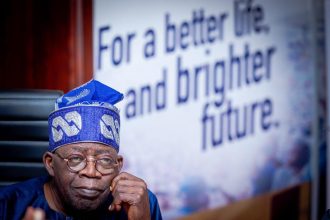


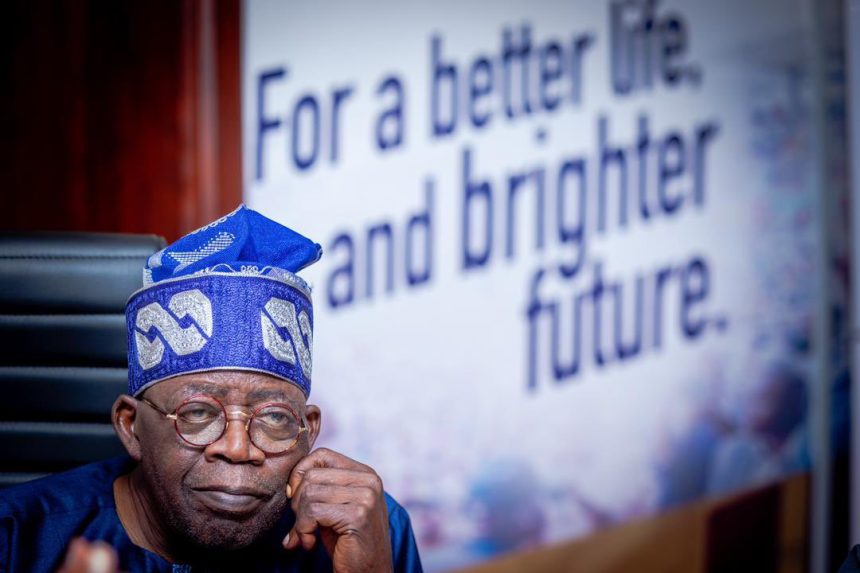
President Bola Tinubu has said reducing the cost of living will be the Federal Government’s main priority as his administration moves into what he described as a new phase of economic reforms.
Tinubu made the declaration in his Independence Day address to Nigerians on Thursday, October 1, as the country marked its 66th anniversary.
The President said the government would focus on lowering the cost of producing and transporting goods in an effort to make essential commodities more affordable.
“Our priority is to bring down the cost of living. We will achieve this by lowering the cost of producing and moving the things Nigerians consume,” he said.
According to him, the government plans to expand mechanised irrigation and dry-season farming, improve farmers’ access to seeds and fertiliser, increase mechanisation and invest in storage and transportation infrastructure.
Tinubu also said the government was building and completing roads, railways and ports to improve the movement of agricultural and manufactured goods from production centres to markets.
Tinubu: Economic emergency treatment over
The President said his administration had spent the past three years addressing what he described as deep-rooted economic distortions and was now shifting its attention towards “shared and widespread prosperity.”
He said successive governments had postponed difficult economic decisions, allowing structural problems to worsen.
Tinubu likened Nigeria’s economic situation to that of a cancer patient who must undergo difficult treatment rather than rely on medication that only manages the symptoms.
“For too long, Nigeria’s leaders chose morphine while praying for a miracle that never came,” he said.
The President said his administration instead chose to confront the underlying problems, acknowledging that the reforms had caused hardship for many Nigerians.
“The reforms that followed were difficult. The side effects were real. Yet, we must never confuse the medicine with the disease,” he said.
“Our reforms did not create the weaknesses in our economy. They confronted them.”
Tinubu also rejected calls to return to the previous fuel subsidy arrangement, arguing that doing so would reverse the changes his administration had introduced.
He said the government would remain focused on the reforms while working to ensure that Nigerians benefit from improved economic conditions.
Tinubu cites economic gains
The President said Nigeria’s economy had grown by more than four per cent in 2026, with both the oil and non-oil sectors contributing to the growth.
He also cited a decline in inflation from its peak, higher foreign reserves, greater stability in the foreign exchange market and a reduction in oil theft.
Tinubu further said Nigeria recorded more than $6bn in non-oil export revenue in 2025, describing it as the country’s highest-ever figure.
“Three and a half years later, the evidence that Nigeria’s economic outlook has improved is undeniable,” he said.
The President said the next phase of his administration would focus on translating those economic developments into improvements in household welfare.
Govt targets food, transport costs
Tinubu said reducing the cost of living would require government to lower production expenses across agriculture, manufacturing and transportation.
He said increased agricultural production, reduced post-harvest losses, lower energy costs for manufacturers and faster transportation would help bring down the prices consumers pay.
“When a farmer produces more cheaply, when fewer crops are lost between the farm and the market, when a manufacturer spends less on electricity, when a truck reaches its destination faster, and when the business environment fosters fair competition, all those savings will ultimately find their way into the price of goods in the market,” he said.
Tinubu said the government would also continue investing in infrastructure that connects farms and factories to consumers.
President promises more jobs, industrial growth
The President said his administration would make job creation, enterprise and industrial development central to its economic policies.
He said the government planned to use Nigeria’s gas resources to support new industries, help revive factories in industrial centres, expand digital connectivity and provide Nigerians with skills required by employers.
Tinubu also called for increased domestic production and said he wanted Nigerian businesses to produce goods for both local and international markets.
“I want to see more Nigerians making things. I want to see more Nigerian farms feeding our cities and supplying our factories. I want to see Nigerian businesses selling Nigerian goods to the whole world,” he said.
‘We cannot erase in four years what accumulated over generations’
Tinubu acknowledged that millions of Nigerians still struggle to afford food, school fees, healthcare and transportation.
He argued that many of the country’s economic challenges predated his administration and resulted from decades of low productivity, inadequate infrastructure and limited economic opportunities.
“We cannot erase in four years what accumulated over generations. But we can change its course,” he said.
The President said the government would strengthen support for vulnerable households and improve the National Social Register to ensure that assistance reaches people who need it.
He also highlighted the Nigerian Education Loan Fund, saying it was helping students from low-income families access higher education.
Tinubu further cited the Consumer Credit Corporation, CREDICORP, which provides working Nigerians with credit to acquire assets such as vehicles, solar systems and digital devices.
He said the Federal Government would continue working with state and local governments to strengthen primary healthcare, basic education and other essential services.
The President also said the government had continued to pay salaries and pensions on time and in full since 2023 while implementing reforms to the pension system.
“These programmes are not substitutes for prosperity. They are a bridge to aid our nation’s citizens on their path towards it,” Tinubu said.
“Our objective is not to manage poverty more efficiently. We will defeat it.”