


Fresh scrutiny has emerged around the political activities of former Kaduna State governor Nasir El-Rufai after he was seen discussing opposition party plans moments before entering a courtroom where he is currently facing corruption charges.
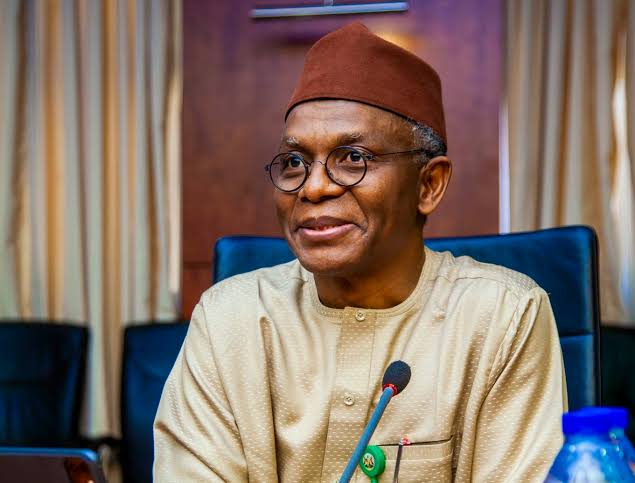
The development unfolded at the Kaduna State High Court, where proceedings resumed in a case brought by the Independent Corrupt Practices and Other Related Offences Commission. Video footage circulating online shows El-Rufai arriving at the court premises in traditional attire, surrounded by supporters, legal aides, and security personnel, an atmosphere that reflected both political tension and public interest.
However, what has drawn closer attention is a brief exchange captured before he entered the courtroom, where he referenced the upcoming national convention of the African Democratic Congress. In the clip, El-Rufai appeared to confirm details about the event, suggesting continued strategic involvement in opposition politics despite his ongoing legal challenges.
The timing of this interaction has raised broader questions among observers about the intersection between his legal battles and political engagements. While no laws prohibit a defendant from participating in political activities, analysts note that such visibility during an active trial could influence public perception and political narratives.
El-Rufai is currently facing multiple charges alongside Amadu Sule, including allegations of abuse of office, fraud, and conferring undue advantage. In a separate case before the Federal High Court in Kaduna, he is also accused of financial misconduct involving approximately ₦579.6 million and $1.1 million. He has consistently denied all allegations, maintaining that the charges are unfounded.
The situation is further complicated by the sequence of legal actions since his return to Nigeria from Cairo in February 2026. Following his arrival, he was initially held by the Economic and Financial Crimes Commission before being transferred to the ICPC. His temporary release to attend his mother’s burial, followed by a return to custody, has added a human dimension to an otherwise high-profile legal battle.
Of particular interest is the overlap between his legal timeline and political calendar. His bail hearing at the Federal High Court has been scheduled for April 14, the same day the ADC is expected to hold its national convention. This coincidence has sparked debate over whether the timing is incidental or indicative of deeper political undercurrents.
Supporters within the ADC have argued that El-Rufai’s prosecution is politically motivated, framing it as an attempt to weaken opposition figures ahead of future elections. However, the ruling All Progressives Congress has dismissed such claims, insisting that the legal process is independent and based on evidence.
From an investigative standpoint, the unfolding situation highlights a complex overlap of law, politics, and timing. The dual pressures of court proceedings and political commitments place El-Rufai at the centre of a broader national conversation about accountability and political influence.
For Newspadi, the key issue is not just the legal merits of the case, but what the situation reveals about Nigeria’s political climate. When high-profile figures remain politically active while facing serious allegations, it raises questions about institutional strength, public trust, and the boundaries between justice and political strategy.
As proceedings continue, attention will remain fixed on both the courtroom and the political arena, with the outcome likely to shape not only El-Rufai’s future but also perceptions of how justice is administered in politically sensitive cases.