


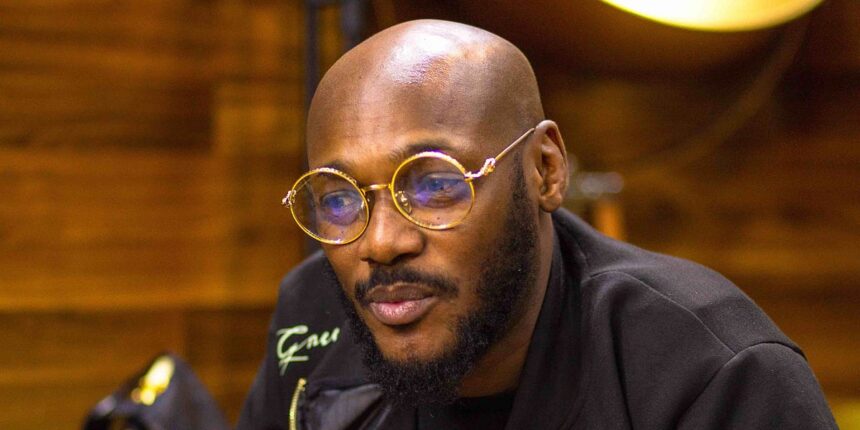
A recent comment by Nigerian music icon Innocent Idibia has sparked a deeper conversation about the true state of Nigeria, raising questions that go beyond entertainment and into national reflection.
During a television appearance, the veteran artist suggested that Nigeria is “better off” today than it was years ago, a statement that has since divided public opinion and triggered widespread debate across social and political circles.
His position, while brief, touches on a long-standing national argument, one that pits historical perspective against present-day realities.
For many Nigerians, current challenges such as inflation, insecurity, and governance concerns dominate daily life, making any claim of improvement difficult to accept at face value. Yet, others argue that progress, though uneven, has been made in key areas over time.
2Baba’s remark appears to lean on this broader, long-term view. Nigeria today operates within a more open democratic space compared to past military eras, with increased civic participation, digital activism, and freedom of expression shaping public discourse in ways that were previously limited.
Observers also point to advancements in sectors such as technology, entertainment, and entrepreneurship, where Nigeria has gained global recognition. The rise of Afrobeats, to which 2Baba himself contributed significantly, has placed the country firmly on the international cultural map.
However, critics of the singer’s position argue that these gains do not necessarily translate into improved living conditions for the average citizen. Economic pressures, rising cost of living, and persistent insecurity remain pressing concerns that continue to affect millions.
The contrast between structural progress and everyday hardship lies at the heart of the ongoing debate.
During the same appearance, 2Baba also addressed questions about his potential involvement in politics. While he stopped short of declaring any formal ambition, he hinted at a continued interest in contributing to national development in his own way.
He explained that his past advocacy roles required a level of neutrality, but maintained that he remains committed to making an impact, suggesting he may define his own path outside traditional political structures.
“I will set up my own position and try to make a difference,” he said, signalling a personal commitment to engagement rather than direct political participation.
The singer also described himself as a self-appointed ambassador of Nigeria, reinforcing his long-standing identity as a cultural representative of the country on the global stage.
This perspective aligns with his career trajectory, having used music and public platforms to address social issues, promote unity, and project Nigeria’s image internationally.
Public reactions to his comments have been sharply divided. While some supporters agree that Nigeria has made measurable progress over the decades, others view the statement as disconnected from the realities faced by ordinary citizens.
Newspadi view, progress depends on perspective
2Baba’s remarks highlight an important truth, national progress is often a matter of perspective.
From a historical standpoint, Nigeria has indeed evolved, politically, culturally, and technologically. However, from a day-to-day survival standpoint, many citizens feel that conditions have either stagnated or worsened.
Both realities can exist at the same time.
The challenge, therefore, is not just to debate whether Nigeria is better off, but to bridge the gap between structural progress and lived experience. Until improvements are felt at the grassroots level, optimism from public figures will continue to be met with scepticism.
In the end, 2Baba’s statement has achieved something significant, it has reignited a necessary national conversation, forcing Nigerians to reflect not just on where the country stands today, but on where it is truly headed.