



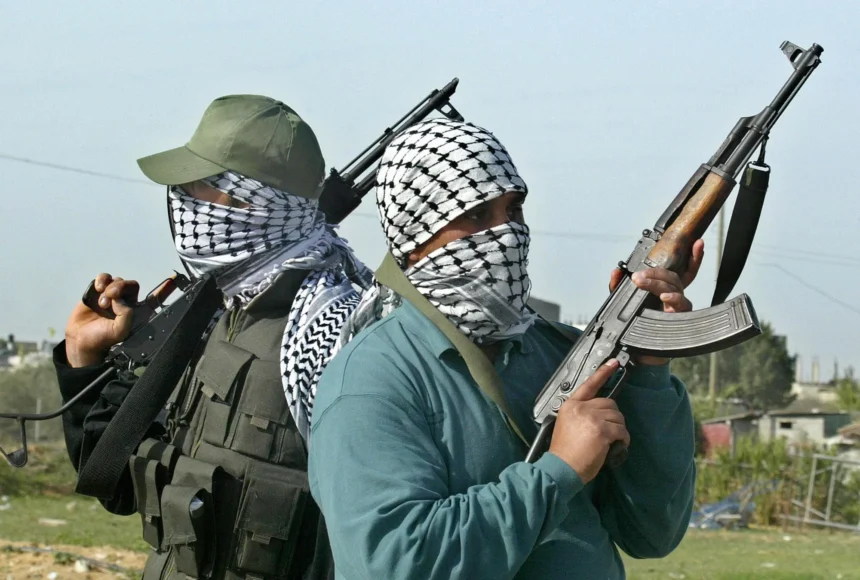
The fragile peace of the Easter celebrations in Southern Kaduna was shattered in the early hours of Sunday as coordinated terror raids targeted the heart of the Ariko community in Kachia Local Government Area. Details gathered by Newspadi and local officials suggest a sophisticated level of planning by the assailants, who exploited known security vulnerabilities to launch a deadly assault on two prominent Christian worship centres.
The anatomy of the raid
The attackers, described by survivors as a “large, well-armed contingent,” strategically surrounded both the First ECWA Church and St. Augustine Catholic Church. Under the cover of the early morning mist, they opened fire on congregants during the peak of the festive service. While the immediate death toll is cited at seven, intelligence obtained by Newspadi from local leaders suggests the number could rise as more residents are accounted for. The precision of the attack indicates that the perpetrators were familiar with the community’s layout, specifically targeting the period of maximum vulnerability during the religious holiday.
Exploiting the ‘communication blackout’
A critical factor in the success of the raid appears to be the persistent lack of telecommunications infrastructure in the Ariko District. Mark Bawa, the councillor representing Awon Ward, noted that the absence of a reliable signal effectively isolated the community, preventing any SOS calls from reaching security agencies until the attackers had already retreated into the dense forests with their captives. Findings by Newspadi indicate that the assailants operated for a prolonged period without resistance, highlighting a disturbing trend of rural communities being left to fend for themselves despite repeated warnings of insurgent movements in the area.
This latest tragedy is not an isolated incident but part of a grim, recurring cycle. Records reviewed by Newspadi show that only two months ago, a strikingly similar raid occurred in the nearby Kurmin Wali community, where scores were abducted during a February gathering. The hallmarks of both attacks, targeting religious festivities and utilizing the region’s difficult terrain for a swift exit, suggest a deliberate strategy to destabilize Southern Kaduna during high-profile social events.
The search for accountability
As the community begins the painful task of identifying the fallen and praying for the return of the abducted, questions are being directed at the state’s security apparatus. While the Kaduna State Police Command, through PPRO DSP Mansir Hassan, has acknowledged the incident, there is growing frustration over the perceived lack of proactive intelligence-gathering in known “hot zones.” Observations by Newspadi suggest that for the people of Kachia, the celebration of Easter has been replaced by a familiar sense of mourning and a loud demand for a permanent, rather than reactive, security presence in the state’s most vulnerable rural corridors.