


Israel has escalated its military operations across Lebanon this week, widening the scope of its strikes beyond traditional Hezbollah strongholds and deep into civilian-populated areas, a development that has heightened fears of a prolonged and more devastating conflict.
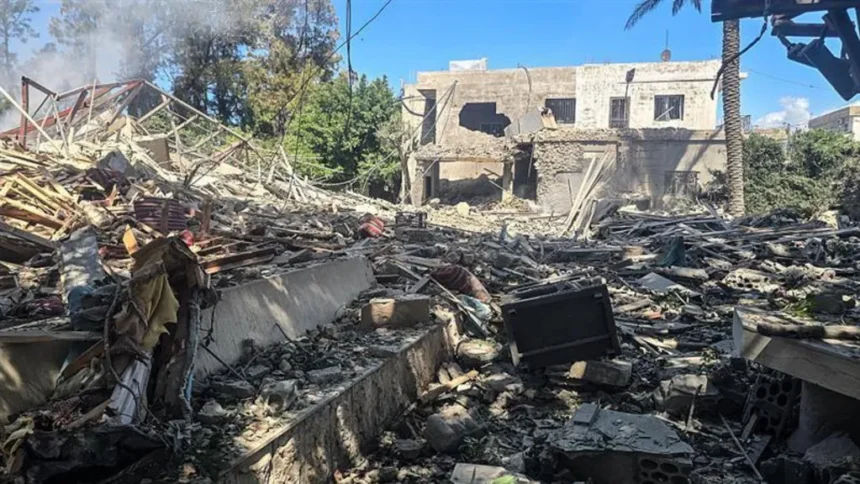
On Tuesday, fresh airstrikes struck multiple locations, including areas north of Beirut and the Jnah district in the heart of the capital. Residents reported that some of the attacks came without prior warning, sparking panic among civilians already grappling with displacement and uncertainty.
In the Mansourieh area, a largely Christian residential neighbourhood north of Beirut, an Israeli strike targeted a moving vehicle, marking a significant expansion of the conflict zone beyond Hezbollah’s known areas of influence. Hours later, explosions rocked Jnah shortly after midnight, leaving several people injured. Lebanon’s Ministry of Health confirmed that victims of the attack were treated at Al-Zahraa Hospital.
Eyewitnesses described scenes of chaos and confusion. A resident of Jnah recounted hearing multiple loud explosions overnight, noting that many displaced individuals have resorted to sleeping outdoors due to the destruction of homes and fear of further attacks.
Meanwhile, southern Beirut suburbs such as Dahieh, widely regarded as Hezbollah’s stronghold, continue to face sustained bombardment. In Ghobeiry, a building along the airport road was levelled after authorities issued an evacuation warning shortly before the strike.
In southern Lebanon, the humanitarian situation has worsened significantly. Health authorities confirmed that at least seven people lost their lives in recent strikes, including a paramedic. The death toll among healthcare workers has now climbed to 53 since the conflict intensified, raising serious concerns about the safety of medical personnel operating in conflict zones.
Israel’s military said the strikes targeted Hezbollah infrastructure in Beirut and claimed responsibility for killing a senior commander alongside another high-ranking member of the Iran-backed group. The development comes amid an intensifying regional conflict that began late February, when the United States and Israel launched attacks on Iran, a key Hezbollah ally. Hezbollah responded days later by firing missiles into Israeli territory, further escalating tensions.
As the conflict deepens, Israeli ground forces have advanced into southern Lebanon, prompting the Lebanese Armed Forces to withdraw from some frontline positions. Troops pulled out of Ain Ibel and Rmeish villages shortly after an Israeli airstrike hit a military checkpoint, killing a soldier. Israeli authorities have yet to publicly comment on that incident.
Despite the growing danger, some residents have refused to abandon their homes. In Rmeish, a predominantly Christian village, a local priest publicly declared that residents would remain in place despite the risks, expressing a willingness to either survive together or face death rather than lose their ancestral land.
Israel has also announced plans to establish a security buffer zone extending up to the Litani River, roughly 30 kilometres from its border with Lebanon. Defence Minister Israel Katz stated that Israeli forces would retain control of the area even after the war ends, a position that has drawn criticism from the United Nations and raised concerns about a potential long-term occupation.
The proposed buffer zone has triggered a mass displacement crisis. Hundreds of thousands of residents have fled southern Lebanon, while supply routes into the region have been severely disrupted due to repeated strikes on bridges and critical infrastructure. Many communities now face extreme shortages of basic necessities, making daily life increasingly unsustainable.
Katz further stated that displaced residents would not be allowed to return until Israel guarantees the safety of its northern communities. He also indicated that border villages in Lebanon could face widespread demolition, drawing comparisons to similar military strategies used in Gaza.
Lebanon’s government has condemned Israel’s actions, describing them as a violation of national sovereignty. The country’s health ministry reported that at least 1,268 people have been killed since the escalation began, while the United Nations estimates that over one million people have been displaced.
For many Lebanese, the unfolding events evoke painful memories of past conflicts, including Israel’s 18-year occupation of southern Lebanon between 1982 and 2000. Generations have experienced repeated cycles of displacement, loss, and rebuilding, only to face renewed destruction.
Analysts warn that the situation presents a complex military reality. While Israel maintains superior airpower and advanced weaponry, Hezbollah retains strong ground capabilities and could resort to prolonged guerrilla warfare if Israeli forces remain in the south.
As the conflict drags on, uncertainty continues to grip the region. For the hundreds of thousands forced from their homes, the prospect of a quick resolution appears increasingly unlikely, with many bracing for a drawn-out crisis that could reshape the geopolitical landscape of the Middle East.