


Fresh concerns have emerged over security coordination within Nigeria’s armed forces after a violent clash between uniformed personnel in Bayelsa State during the visit of President Bayelsa security, with the Nigerian Navy confirming that those involved have now been arrested and placed under disciplinary procedures.
The incident, which unfolded in public view and was captured in a widely circulated video, has drawn attention not just for the confrontation itself but for what it may reveal about deeper coordination challenges among security agencies during high-profile state events.
Eyewitness footage shows what began as a verbal exchange between a driver attached to a naval unit and another uniformed officer quickly escalating into physical violence. The driver of a Hilux vehicle marked “Naval Police” was seen stepping out to confront another personnel before returning to his vehicle. Moments later, a soldier approached and struck him, triggering a chaotic exchange as other officers from both sides joined the altercation.
The fight, which played out in front of civilians, occurred at a sensitive moment as the President was departing an official function, raising concerns among observers about discipline, command structure, and operational control during presidential movements.
While the immediate cause of the confrontation remains unclear, security analysts say such incidents often point to underlying tensions, including breakdowns in communication, rivalry between units, or disputes over protocol and authority at joint operations.
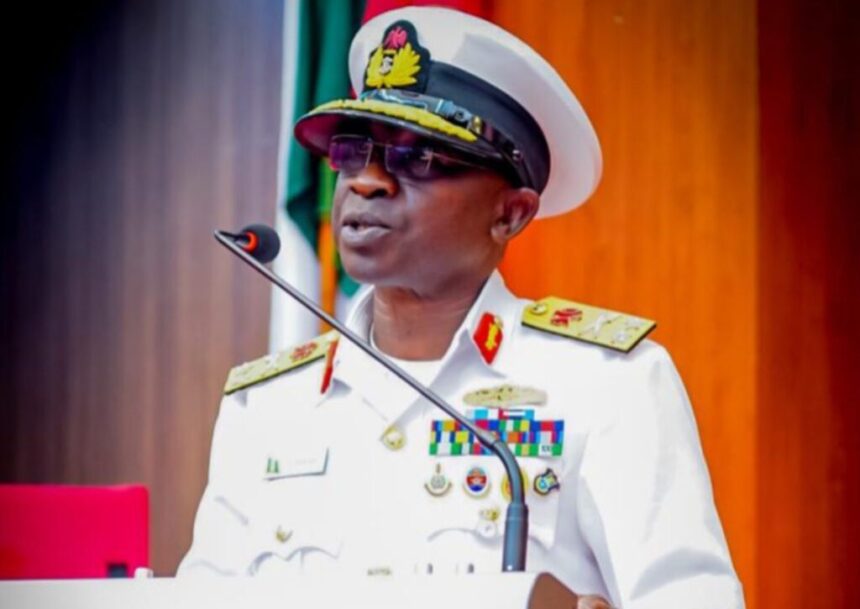
In a statement issued after the video gained traction online, Abi Folorunso, Director of Naval Information, confirmed that the personnel involved have been taken into custody. According to him, they are undergoing administrative and disciplinary procedures in line with military regulations.
However, beyond the official response, questions persist over how such a breakdown could occur in a high-security environment, especially during a presidential visit where multiple security agencies are expected to operate under strict coordination.
Military observers note that joint operations involving different branches of the armed forces require clear command hierarchy and communication protocols. Any lapse, particularly in a public setting, risks not only embarrassment but also potential security vulnerabilities.
The viral footage has also sparked public debate, with many Nigerians expressing concern over the professionalism of security personnel and the image projected by such incidents. For some, the altercation reflects a broader issue of discipline within the ranks, while others see it as an isolated breakdown that should not overshadow the wider efforts of the armed forces.
From an investigative standpoint, the incident raises critical questions that go beyond the immediate disciplinary action. What triggered the confrontation between the officers, were there prior tensions between the units involved, and were standard operational guidelines followed during the President’s movement in the state?
There is also the issue of accountability and transparency, as the outcome of the disciplinary process will likely determine whether the matter is treated as a routine infraction or as part of a deeper institutional concern.
For now, the Nigerian Navy’s swift move to detain those involved signals an attempt to contain the fallout. But as scrutiny continues, the incident may serve as a test case for how Nigeria’s security agencies address internal conflicts, enforce discipline, and restore public confidence.
As investigations proceed, attention will remain on whether the findings will be made public and whether any structural reforms will follow to prevent a recurrence of such an incident during future high-level engagements.