


Fresh details emerging from the deadly assault on a military base in Benisheikh, Borno State, are raising serious questions about how insurgents were able to breach defences and kill a senior commander, even as the military maintains that the situation was contained.
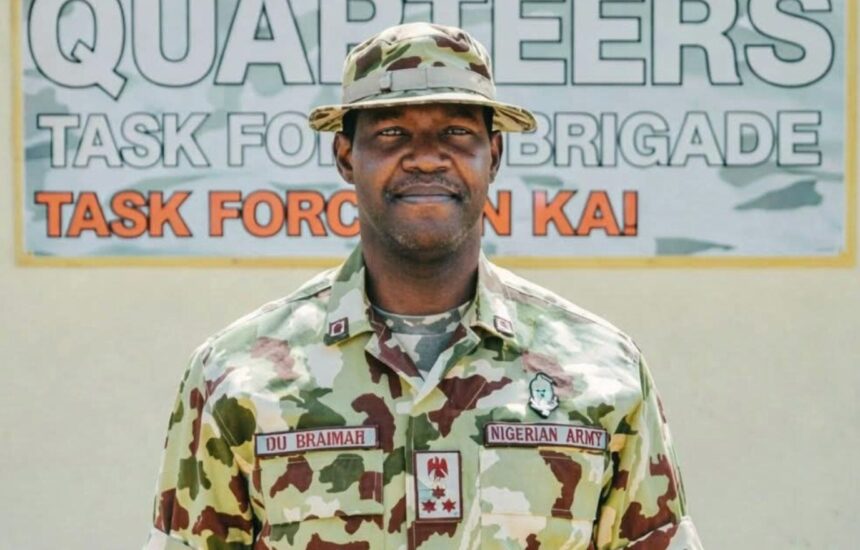
At the centre of the incident is the death of Brigadier General Oseni Braimah, commander of the 29 Task Force Brigade, whose killing during the midnight attack has sparked conflicting narratives between official statements and accounts from soldiers and residents who witnessed the события.
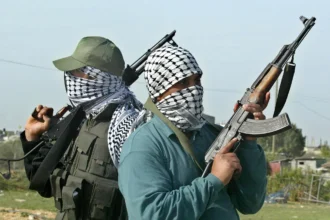
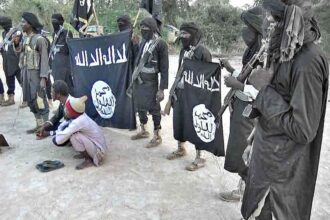
According to multiple survivor testimonies, the attack began around 12.30am when fighters believed to be from Boko Haram and the Islamic State West Africa Province launched a coordinated offensive on Benisheikh, a strategic town along the Maiduguri–Damaturu highway.
Soldiers who spoke under anonymity described the operation as unusually organised and far more intense than previous encounters. They said the attackers advanced simultaneously from different directions, targeting multiple military positions at once in what appeared to be a carefully planned assault.
One of the soldiers said the scale of the attack suggested prior surveillance of troop locations, noting that the insurgents moved with precision and numerical strength that overwhelmed defensive lines. Another survivor confirmed that while troops initially resisted, the attackers’ numbers and multi-directional approach gradually weakened their position.
As the battle progressed, sources said confusion began to spread among troops after reports filtered in that nearby formations had been overrun. The situation worsened when word circulated that the brigade commander had been killed, triggering panic and a breakdown in coordination.
Residents in Benisheikh also described a chaotic scene as heavy gunfire and explosions forced civilians to flee their homes in the middle of the night. Some said soldiers retreated into the town at the peak of the fighting, creating a temporary security gap that allowed attackers to push further and cause widespread destruction.
Eyewitnesses reported that shops, vehicles, and buildings were set ablaze, while travellers stranded due to movement restrictions abandoned their vehicles and ran for safety. By morning, parts of the town and surrounding military facilities had been severely damaged.
While early reports suggested that Brigadier General Braimah died due to a malfunctioning Mine-Resistant Ambush Protected vehicle, insiders within the military have disputed that claim. Sources familiar with the incident said the vehicle was actually set on fire during the attack, describing the situation as more complex than initially portrayed.
A former driver to the late commander also defended his record, stating that Braimah was known for maintaining high standards when it came to equipment and logistics. However, another source pointed to broader systemic issues, suggesting that lapses in maintenance culture and operational readiness may have contributed to vulnerabilities.
In contrast, the military, through Operation Hadin Kai, has maintained that the attack was repelled and that casualty figures being circulated in some quarters are exaggerated. The command insisted that only a small number of personnel were lost and rejected claims of equipment failure, describing such reports as misleading.
Despite these assurances, the scale of destruction described by residents and the consistency in soldiers’ accounts have raised concerns among security observers about the effectiveness of current strategies in the North-East.
The incident also fits into a troubling pattern of attacks that have claimed the lives of senior officers in recent years, highlighting persistent challenges in intelligence gathering, force protection, and response coordination in the fight against insurgency.
President Bola Tinubu has since expressed condolences to the families of the fallen soldiers, commending the military for its resilience and ongoing operations against insurgents. He described the attack as a sign of desperation by armed groups facing sustained pressure from security forces.
However, beyond official assurances, the events in Benisheikh are likely to intensify scrutiny on how such a large-scale assault was executed and whether gaps in preparedness allowed the attackers to gain the upper hand, even if temporarily.
From Newspadi’s perspective, the incident underscores a deeper concern in Nigeria’s counterinsurgency efforts, where recurring attacks on military formations continue to expose possible weaknesses in coordination, intelligence, and rapid response systems. While battlefield losses are part of warfare, repeated breaches of fortified positions raise questions that go beyond isolated incidents.
For many observers, the key issue is not just how the attack was repelled, but how it was able to happen at such scale in the first place. Until those questions are addressed with transparency and reform, similar incidents may continue to test the resilience of both troops and affected communities in the region.