


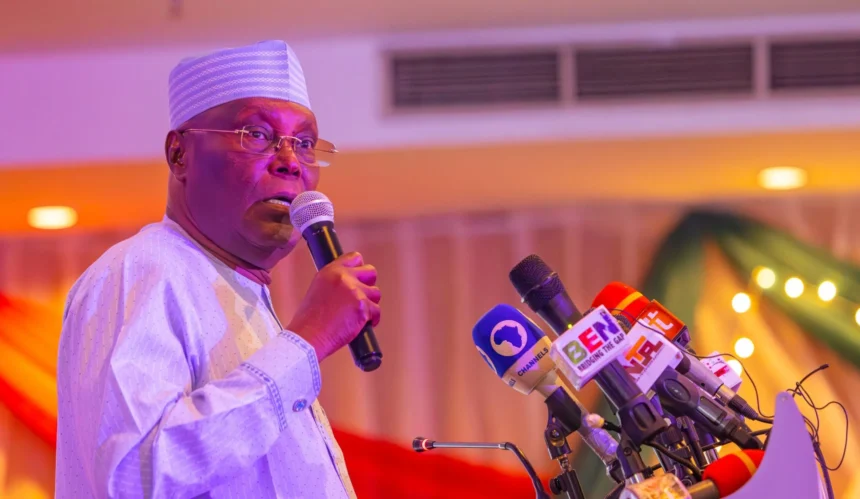
A fresh layer of international political manoeuvring has emerged ahead of Nigeria’s 2027 elections, as former Vice-President Atiku Abubakar quietly secured a multimillion-dollar lobbying contract in the United States aimed at reshaping his global image and influencing policy conversations around Nigeria.
Documents filed with the U.S. Department of Justice reveal that a Washington-based firm, Von Batten-Montague-York, has been contracted to represent Atiku’s interests in high-level political circles across Washington. The agreement, signed in March 2026, is valued at $1.2 million over a 12-month period and outlines a structured campaign targeting U.S. lawmakers, policymakers, and strategic institutions.
The filings, made under the U.S. Foreign Agents Registration Act, indicate that the engagement goes beyond routine advisory services. It includes direct lobbying of members of Congress, interaction with officials in the executive branch, and strategic communication designed to influence how Nigeria’s political climate and Atiku’s role within it, is perceived abroad.
At the heart of the contract is a clear objective, to counter narratives linked to the Nigerian government and present an alternative perspective on governance, democracy, and economic direction in the country. The firm is also tasked with promoting Atiku’s leadership profile while positioning him as a credible voice on regional stability and economic reform in West Africa.
The scope of work suggests a coordinated effort to build influence ahead of what is expected to be a highly contested political cycle. The lobbying firm is expected to facilitate meetings between Atiku and key figures in Washington, including lawmakers and policy advisers, while also crafting messaging strategies aimed at shaping long-term perception.
Further indications of the firm’s role surfaced in early April, when it publicly signalled plans to engage U.S. authorities, including Donald Trump and members of Congress, over recent developments in Nigeria’s opposition space. The statement referenced concerns about the deregistration of factions within the African Democratic Congress by the Independent National Electoral Commission, describing the situation as one that could limit the opposition’s ability to organise effectively.
The move has drawn attention to the growing intersection between domestic Nigerian politics and international lobbying efforts. Analysts say such engagements are not uncommon among political actors seeking to build credibility on the global stage, particularly in Washington, where foreign policy narratives can influence investor confidence, diplomatic relations, and broader geopolitical positioning.
Atiku’s decision to invest heavily in U.S.-based lobbying comes at a time when Nigeria’s political environment is experiencing heightened tension. The opposition landscape remains unsettled, with internal disputes within the ADC raising questions about party structure and preparedness ahead of the next election cycle.
While lobbying activities in Washington are governed by strict disclosure laws, the implications of such engagements often extend beyond transparency filings. They can shape conversations around democratic processes, election integrity, and international partnerships, especially when tied to high-stakes political ambitions.
There has been no official response from the Nigerian government regarding the contract, but the development is likely to fuel debate over the use of foreign lobbying in domestic political contests.
From an investigative standpoint, the agreement raises key questions about how Nigerian political actors are seeking to influence international opinion and whether such strategies could play a role in shaping both perception and policy ahead of 2027.
Newspadi’s findings suggest that this is not merely a public relations effort, but part of a broader strategy to establish influence in critical diplomatic corridors. By engaging a firm with direct access to U.S. policymakers, Atiku appears to be positioning himself within a global narrative that extends beyond Nigeria’s borders.
The development highlights a shifting dynamic in Nigerian politics, where international lobbying is increasingly becoming a tool for domestic political advantage. As the 2027 elections draw closer, attention will likely turn to how such strategies evolve and whether other political actors will adopt similar approaches in the race for influence both at home and abroad.