



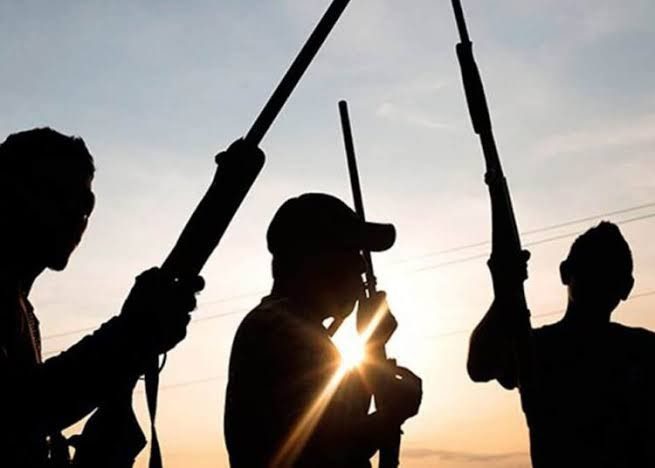
What began as a routine market evening in parts of Gwer East quickly descended into chaos, as gunmen stormed rural communities, leaving bodies on the ground and survivors fleeing into nearby bushes.
Residents of Mbalom, Mbatsada, and Agana in Benue State say the attack, which occurred around dusk on Saturday, was both sudden and devastating. Eyewitness accounts suggest the assailants arrived during peak activity, targeting not just homes but also a busy market in Mbalom, where traders and buyers had gathered.
Local sources estimate that at least nine people were killed, though the figure could rise as search efforts continue. Several others sustained injuries, while many families have been displaced, abandoning their homes in fear of further violence.
The chairman of Gwer East Local Government Area, Timothy Adi, confirmed that nine bodies had been recovered so far, noting that the attack unfolded within a short window between late afternoon and early evening. According to him, two victims were found shortly after the incident, with additional bodies discovered the following day.
For residents, however, the numbers tell only part of the story. Community members who spoke to local sources described a pattern of recurring attacks along the Ikpayongo–Agana–Ayar–Mbalom axis, raising concerns that the area has become increasingly vulnerable despite repeated assurances of improved security.
The latest violence is believed to have been carried out by suspected armed herders, a claim that reflects a broader and long-standing crisis in Benue State, where clashes between farming communities and armed groups have led to repeated loss of lives and displacement.
The timing of the incident has also raised questions. Barely 24 hours before the attack, the state’s Commissioner of Police, Ifeanyi Emenari, had announced the deployment of additional tactical teams by the Inspector-General of Police to strengthen security and ensure a peaceful Easter period. Yet, the attackers were able to strike multiple communities almost simultaneously, suggesting possible gaps in intelligence or response coordination.
Attempts to reach the Benue State Police Command for immediate clarification were unsuccessful, leaving many residents uncertain about the extent of ongoing security operations in the affected areas.
Reacting to the incident, Governor Hyacinth Alia condemned the killings, describing them as a “barbaric act” and a direct threat to the peace of the state. In a statement issued through his media office, the governor acknowledged what he described as a pattern of “calculated and selective attacks” across parts of Benue.
He assured residents that security agencies had been mobilised and were pursuing those responsible, while also pledging to strengthen intelligence gathering and overall security architecture.
Despite these assurances, questions remain about why such attacks continue to occur with alarming frequency. Analysts familiar with the region point to a combination of factors, including porous rural security networks, limited surveillance, and the challenge of policing vast agricultural communities with difficult terrain.
There are also concerns about the effectiveness of previous interventions, as many affected communities report that attackers often return even after security deployments are announced. This cycle has left residents in a state of constant fear, with some relying on informal local defence groups for protection.
For families affected by Saturday’s violence, the immediate concern is survival. Displaced residents are seeking shelter in neighbouring communities, while others are calling for urgent humanitarian support as they grapple with the aftermath of the attack.
From a broader perspective, the incident underscores a troubling reality, repeated warnings and reactive deployments may no longer be enough to address the scale of insecurity in parts of Benue. Without sustained presence, proactive intelligence, and stronger community engagement, such attacks risk becoming a recurring feature rather than isolated events.
For now, the affected communities are left counting their losses, while hoping that this latest tragedy will prompt more decisive action to prevent another cycle of violence.