


A late-night crash at Soka junction along the Ibadan–Lagos Expressway has once again drawn attention to growing concerns over heavy-duty truck operations, enforcement gaps, and road safety compliance on one of Nigeria’s busiest corridors.
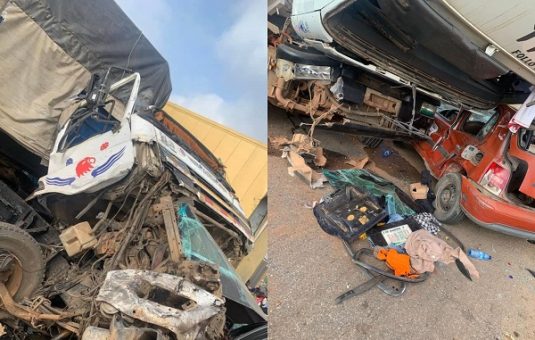
The incident, which occurred around 10:10 p.m. on Saturday, left two people dead and several others injured after a fully loaded truck reportedly lost control and ploughed into vehicles and pedestrians in the area.
Authorities in Oyo State later confirmed the development, with the spokesperson of the Nigeria Police Force in the state, Ayanlade Olayinka, stating that the crash involved a white HOWO truck driven by one Abdullahi Bashiru.
According to preliminary findings, the truck was allegedly moving at high speed before the driver lost control, triggering a chain reaction that led to multiple collisions. Vehicles affected included a Toyota Venza and a BMW, alongside other road users caught in the impact zone.
While official statements point to reckless driving and excessive speed as immediate causes, road safety observers say the tragedy reflects a deeper, recurring problem on Nigerian highways, particularly involving long-haul trucks operating at night.
Pattern of night-time truck accidents
Data from road safety advocacy groups suggest that a significant number of fatal crashes on major highways occur during late hours, when visibility is reduced and enforcement presence is often limited. The Ibadan–Lagos Expressway, a critical economic route linking the South-West to other parts of the country, has repeatedly been flagged as a hotspot for such incidents.
Transport analysts note that many truck drivers operate under tight delivery schedules, often leading to fatigue, speeding, and reduced reaction times. In some cases, vehicles are also said to be poorly maintained, further increasing the risk of brake failure or loss of control.
Questions over enforcement and regulation
Saturday’s crash has also reignited questions about the enforcement of traffic regulations, particularly for heavy-duty vehicles. Despite existing guidelines on speed limits and vehicle checks, compliance remains inconsistent.
Experts argue that routine monitoring of trucks, especially at night, is still weak, allowing dangerous driving habits to persist. There are also concerns about whether drivers undergo adequate training before being entrusted with large commercial vehicles on high-speed highways.
Emergency response and casualties
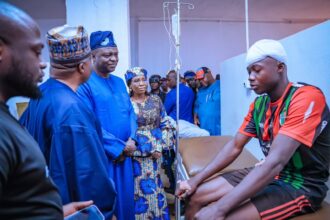
Following the crash, emergency responders and security personnel were deployed to the scene to evacuate victims and restore traffic flow. Several injured persons were rushed to nearby medical facilities, while the remains of the deceased were deposited at a morgue.
The Commissioner of Police in Oyo State, Abimbola Olugbenga, expressed condolences to the families of the victims and wished the injured a speedy recovery.
Authorities have also confirmed that a full investigation is underway to determine the complete sequence of events leading to the accident.
Newspadi view, beyond driver error
While initial reports attribute the crash to reckless driving, incidents like this point to a broader systemic issue that goes beyond individual mistakes. Road safety in Nigeria is often treated as a reactive concern rather than a preventive priority.
From weak enforcement to poor vehicle regulation and limited driver welfare systems, multiple factors combine to create conditions where such tragedies become frequent.
There is a growing need for stricter monitoring of haulage operations, better road surveillance, and policies that address driver fatigue and vehicle maintenance standards. Without these, accidents like the one at Soka junction risk becoming a recurring headline rather than an urgent call to reform.
As investigations continue, the focus may not only be on what went wrong that night, but on why similar incidents continue to occur on Nigeria’s major highways with alarming regularity.