


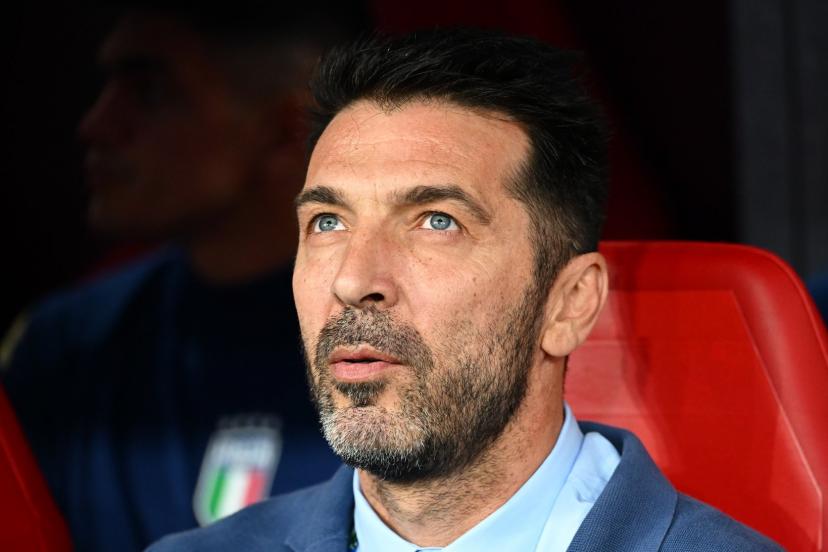
Former Italy goalkeeper Gianluigi Buffon has resigned from his role within the national team setup, following the country’s failure to qualify for the 2026 FIFA World Cup, a development that has intensified scrutiny on Italian football’s leadership and long-term direction.
The decision comes days after Italy suffered a painful play-off defeat to the Bosnia and Herzegovina national football team, losing 4-1 on penalties in a result that extended the Azzurri’s absence from football’s biggest stage.
Italy’s historic decline raises fresh concerns
Italy’s latest failure marks a troubling pattern for one of football’s most successful nations. The four-time world champions have now missed three consecutive World Cups, having also failed to qualify for the 2018 FIFA World Cup and the 2022 FIFA World Cup.
Analysts across European football circles have described the situation as “unprecedented,” with many pointing to deeper structural issues within the national team and youth development system. Italian media outlets have also questioned whether the country has struggled to evolve tactically in an era where other nations have modernised rapidly.
Buffon, who was part of Italy’s victorious squad at the 2006 FIFA World Cup, acknowledged the gravity of the situation, describing his resignation as “an act of responsibility” after the team fell short of its primary objective.
Leadership exits signal wider shake-up
Buffon’s departure is not happening in isolation. It follows the resignation of Gabriele Gravina, former president of the Italian Football Federation, amid growing criticism from fans, pundits, and former players.
Reports from European sports outlets indicate that internal pressure had been mounting within the federation, with calls for a complete overhaul of leadership and strategy after repeated qualification failures.
Buffon, who had been working closely with the national team in an administrative capacity, said stepping aside would allow new leadership to rebuild without constraints.
“It’s fair to leave it to those who will come after the freedom to choose the figure they think is best to play my role,” he said.
Questions over Italy’s football future
Beyond the immediate disappointment, Italy’s absence from the 2026 World Cup raises broader questions about the country’s football identity and development pipeline.
Observers have pointed to:
- A decline in grassroots investment
- Limited opportunities for young domestic players in top clubs
- Increased reliance on experienced players without adequate transition planning
Some former internationals have also suggested that Italy’s domestic league, once regarded as the strongest in the world, has not kept pace with the intensity and innovation seen in other European leagues.
Global reaction and pressure to rebuild
Across the football world, Italy’s struggles have sparked widespread debate. While some see the current phase as part of a natural cycle in international football, others argue that missing three consecutive World Cups reflects deeper systemic failure rather than temporary decline.
The Italian federation is now expected to begin a comprehensive restructuring process, including potential changes to technical staff, youth development strategies, and administrative leadership.
Newspadi view: a moment of truth for Italian football
From a broader perspective, Italy’s current situation highlights a critical lesson in modern football, history alone is no longer enough to guarantee success.
For years, Italy relied on its legacy, tactical discipline, and defensive tradition. However, the modern game demands constant evolution, investment in youth, and a clear long-term vision.
Buffon’s resignation, while symbolic, represents more than just a personal decision, it signals the end of an era and the urgent need for renewal.
If properly handled, this moment could become a turning point for Italian football. But without decisive reforms, the risk remains that one of the sport’s most iconic nations could continue to fall behind in an increasingly competitive global landscape.
For now, the focus shifts to rebuilding, restoring identity, nurturing talent, and ensuring that the Azzurri can once again compete among football’s elite.